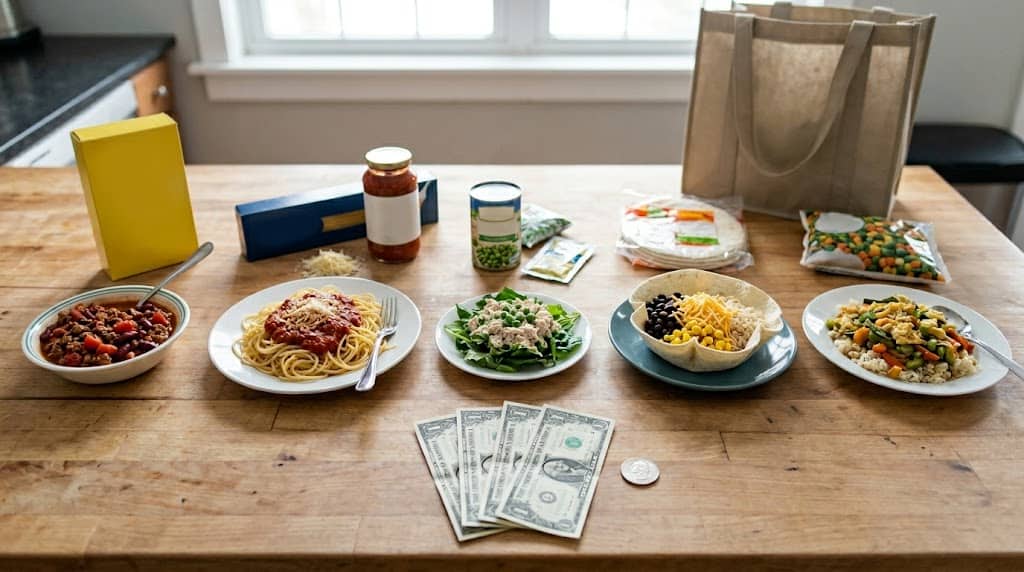
$50 Weekly Meal Plan for a Family of Four
I still remember the week my husband looked at our bank statement and said, “We spent $247 on groceries last week. For four people. How is that even possible?”
He was right. We weren’t buying lobster or imported cheese. We were just shopping without a plan — grabbing whatever looked good, buying stuff we already had at home, throwing away forgotten leftovers on Sunday night, and ordering pizza when nothing in the fridge felt like dinner.
That week I challenged myself to feed our family of four on $50 for seven full days. Not as a gimmick. Not as a starvation diet. But as a real experiment to see if we could eat actual meals — breakfasts, lunches, dinners, and snacks — that were filling, reasonably nutritious, and didn’t make anyone at the table complain.
We did it. And honestly? The meals that week were better than our usual rotation because I actually planned them instead of winging it at 5:30 PM with a hangry toddler pulling at my leg.
This guide gives you the exact meal plan, the complete grocery list, the recipes, and the strategies I used to make $50 feed four people for a full week. Whether you’re going through a tight month, trying to cut expenses, or just curious how low your grocery bill can go, this plan works.
The Rules Behind This $50 Meal Plan
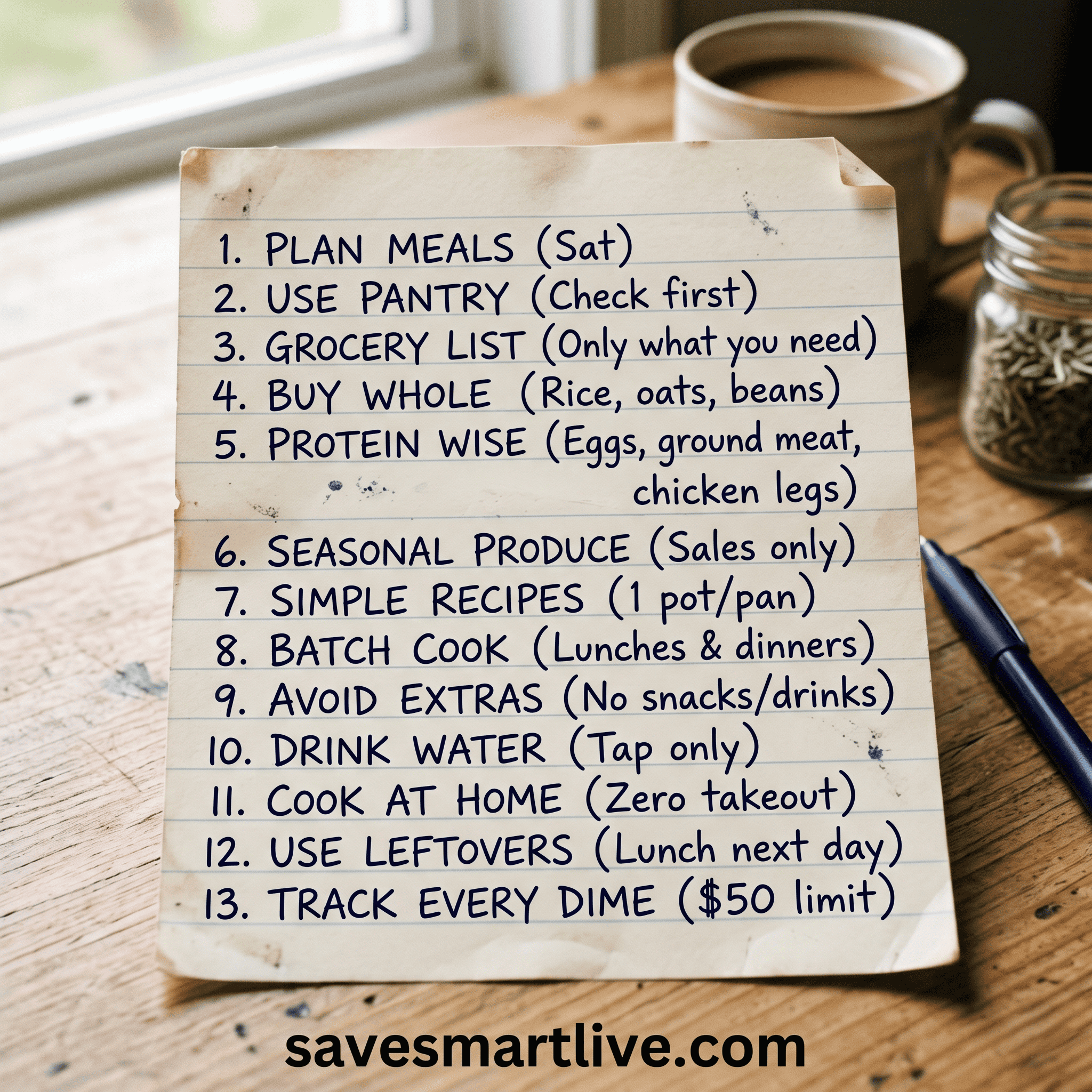
Before we get into the meals, here are the ground rules I followed. These aren’t arbitrary — they’re the principles that make extreme budget eating sustainable and not miserable.
Rule 1: Every meal must be filling. Nobody is going hungry. Portions are real, adult-sized portions. The goal is to eat well for less, not to eat less.
Rule 2: Nutrition matters. Every day includes protein, vegetables, fruit, and whole grains. This isn’t a ramen-and-hot-dogs plan. It’s a plan that a reasonable parent could feel good about feeding their kids.
Rule 3: Meals must taste good. If the food is boring or bland, nobody will eat it. These meals use basic seasonings and simple cooking techniques to create food people actually look forward to.
Rule 4: Leftovers are your superpower. Several dinners are designed to produce leftovers that become the next day’s lunch. This cuts prep time, reduces waste, and stretches every dollar further.
Rule 5: The grocery list assumes you have basic pantry staples. Salt, pepper, cooking oil, butter, flour, and basic spices are assumed to be in your kitchen already. If you’re starting from absolute zero, add $10 to $15 for pantry basics that will last you months.
Pro Tip: Prices in this plan are based on stores like Aldi, Walmart, and Lidl. If you shop at more expensive grocers, the same items will cost more. For the absolute lowest prices, Aldi is hard to beat.
$50 Weekly Meal Plan for a Family of Four
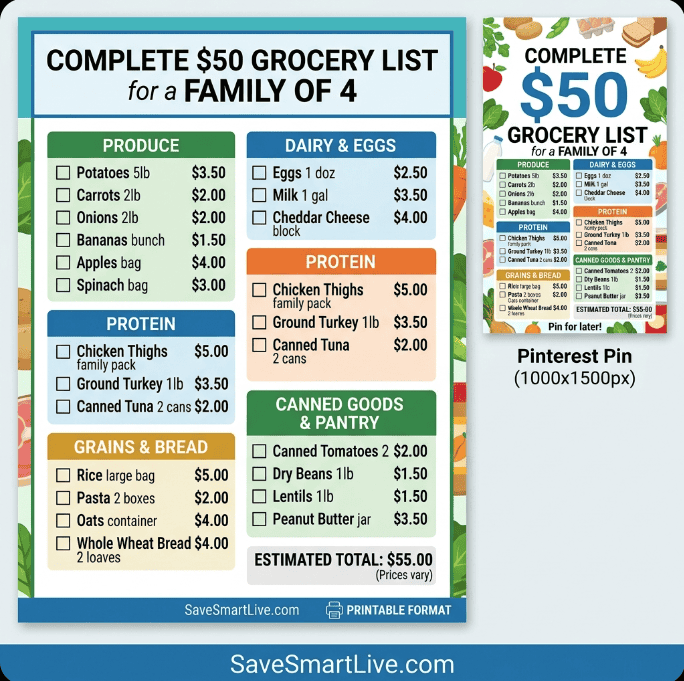
The Complete $50 Grocery List
Here’s everything you need to buy. I’ve organized it by section to make your shopping trip fast.
Proteins ($14.50)
- Whole chicken (about 4-5 pounds) — $5.50
- 1 pound ground beef (80/20) — $4.00
- 1 dozen eggs — $2.50
- 1 can tuna — $1.00
- 1 pound dried black beans — $1.50
Grains and Starches ($8.50)
- 5-pound bag of rice — $3.50
- 1 loaf of bread (store brand) — $1.50
- 1 pound spaghetti — $1.00
- 1 pound oats (old fashioned) — $1.50
- 8 flour tortillas — $1.00
Fruits and Vegetables ($13.00)
- 5-pound bag of potatoes — $3.00
- 1 bag of carrots (2 pounds) — $1.50
- 1 head of cabbage — $1.50
- 1 bag of frozen broccoli — $1.50
- 1 can of diced tomatoes — $0.80
- 1 can of corn — $0.80
- 3 bananas — $0.75
- 3 apples — $2.00
- 1 onion — $0.65
- 1 head of garlic — $0.50
Dairy ($6.50)
- 1 gallon of milk — $3.00
- 1 block of cheddar cheese (8 oz) — $2.50
- 1 container of sour cream — $1.00
Pantry Add-Ons ($5.00)
- 1 can of tomato sauce — $0.60
- 1 packet of taco seasoning — $0.50
- 1 jar of peanut butter — $2.00
- 1 small bottle of soy sauce — $1.00
- 1 chicken bouillon cubes or powder — $0.90
Snacks ($2.50)
- 1 bag of popcorn kernels — $1.50
- 1 box of store-brand crackers — $1.00
Total: $50.00
$50 Weekly Meal Plan for a Family of Four
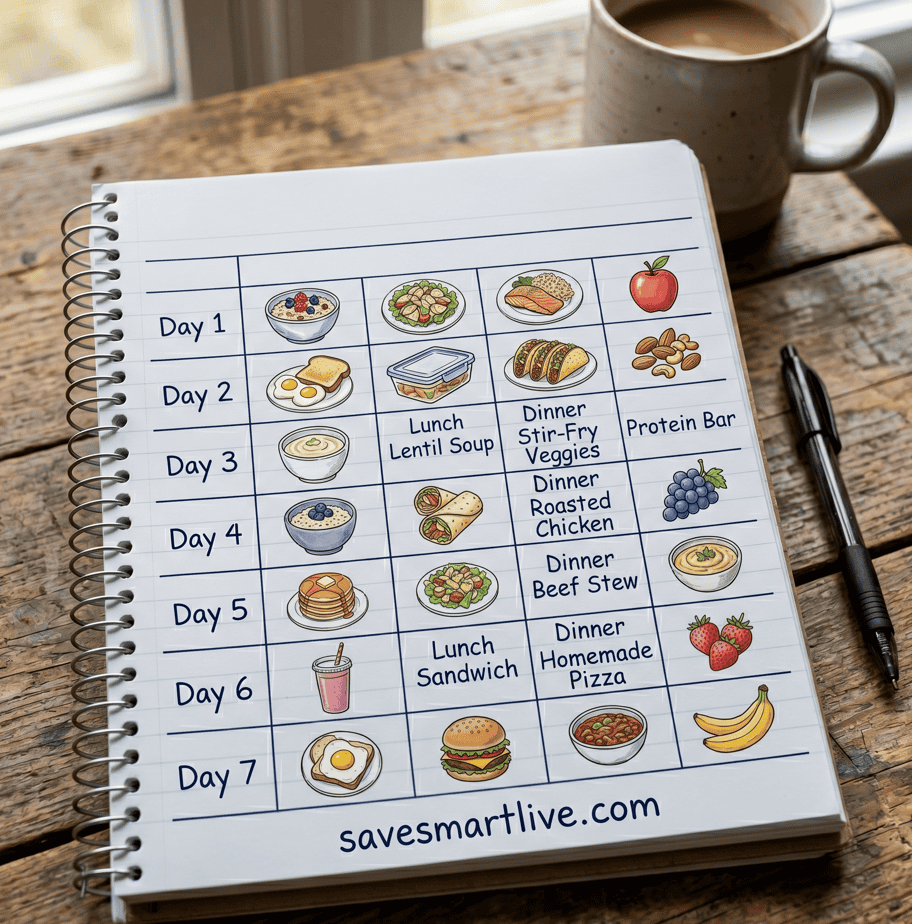
The 7-Day Meal Plan
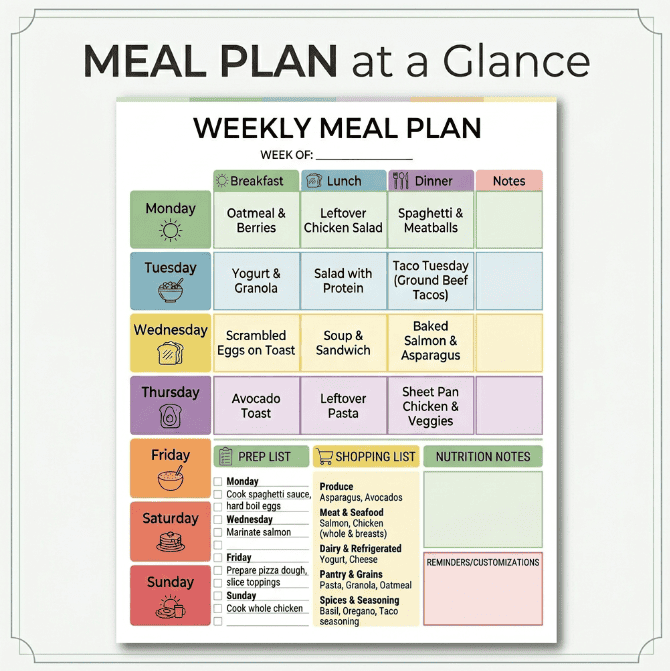
Monday
Breakfast: Oatmeal with sliced banana and a drizzle of peanut butter. Make oats on the stovetop with milk. Top each bowl with banana slices and a spoonful of peanut butter. This is one of the cheapest, most filling breakfasts you can make. The protein from the peanut butter keeps everyone full until lunch.
Lunch: Peanut butter sandwiches with apple slices and crackers. Classic, fast, and no cooking required. Two slices of bread, a thick layer of peanut butter, apple slices on the side, and a handful of crackers.
Dinner: Roast whole chicken with roasted potatoes and carrots. This is the foundation meal of the whole week. Season the chicken with salt, pepper, garlic, and a little oil. Roast at 400°F for about an hour and fifteen minutes. Surround it with cubed potatoes and carrot chunks for the last 40 minutes. One chicken feeds four people with plenty of leftovers for tomorrow.
Pro Tip: Never throw away a chicken carcass. After dinner, put the bones in a pot with water, an onion, and carrot scraps. Simmer for an hour and you have free homemade chicken broth for soup later this week.
Tuesday
Breakfast: Scrambled eggs with toast. Three eggs scrambled with a splash of milk, seasoned with salt and pepper. Two slices of toast each. Fast, protein-rich, and costs about $1.50 for the whole family.
Lunch: Leftover chicken sandwiches. Shred the leftover chicken from last night, pile it on bread, and add whatever you like. A slice of cheese makes it even better. This is a restaurant-quality chicken sandwich for pennies.
Dinner: Beef tacos with rice and beans. Brown the ground beef with taco seasoning and a splash of water. Warm the tortillas. Cook a pot of rice. Serve with shredded cheese, sour cream, and any leftover veggies. Cook the dried black beans (soak overnight or use the quick-soak method) and season them with salt, garlic, and a pinch of cumin.
This dinner is always a hit, even with picky kids. Set everything out buffet-style and let everyone build their own tacos.
Wednesday
Breakfast: Oatmeal with apple slices. Same as Monday but switch the topping. Dice an apple into the oatmeal while it cooks — the apple softens and sweetens the oats naturally.
Lunch: Bean and cheese burritos. Leftover black beans from last night, shredded cheese, and sour cream wrapped in a tortilla. Warm in a dry skillet for a crispy outside. Filling, delicious, and basically free since everything is leftover.
Dinner: Homemade chicken noodle soup with bread. Use the homemade chicken broth from Monday’s carcass. Add chopped carrots, diced potatoes, leftover shredded chicken, and broken spaghetti noodles. Season with salt, pepper, and a bouillon cube for extra depth. Simmer until the vegetables are tender. Serve with slices of bread for dipping.
This soup feeds four people generously and costs almost nothing because the broth and chicken were free leftovers.
Thursday
Breakfast: Eggs and toast with banana. Switch it up — fried eggs instead of scrambled. Cook them in a little butter for crispy edges. Toast on the side. Half a banana each.
Lunch: Tuna salad sandwiches. Mix the can of tuna with a spoonful of sour cream (in place of mayo), salt, pepper, and a tiny bit of diced onion. Spread on bread. Add crackers on the side.
Dinner: Spaghetti with meat sauce and steamed broccoli. Cook the spaghetti. For the sauce, sauté diced onion and garlic, add the can of diced tomatoes, the can of tomato sauce, and some Italian seasoning (or just oregano and basil if that’s what you have). Simmer for 15 minutes. If you have a little leftover ground beef from taco night, add it in. If not, the sauce is delicious on its own. Steam the frozen broccoli as a side.
This is comfort food at its finest. Every person at the table will be full and happy, and the total cost of this dinner is under $4.
Friday
Breakfast: Peanut butter toast with banana. Toast the bread, spread peanut butter thick, and top with sliced banana. Simple, fast, and filling enough for a busy morning.
Lunch: Leftover spaghetti. Reheat last night’s spaghetti. Leftover pasta actually tastes better the next day because the sauce has had time to soak into the noodles.
Dinner: Fried rice with eggs and vegetables. This is the ultimate budget dinner and one of the best ways to use leftover rice. Cook rice if you don’t have leftovers (leftover rice works even better because it’s drier). Heat oil in a large skillet or wok. Scramble two eggs and break them into small pieces. Add the rice, frozen broccoli, corn (drained), diced carrots, and soy sauce. Stir-fry everything together on high heat for 5 minutes.
Fried rice is a revelation when you’re on a budget. It turns leftover rice and random vegetables into something that tastes like takeout. My kids request this even when we’re not on a tight budget.
Pro Tip: The secret to great fried rice is high heat and not stirring too much. Let the rice sit in the pan and get slightly crispy before you flip it. That’s where the magic flavor comes from.
Saturday
Breakfast: Pancakes with a little butter. Mix flour, an egg, milk, a pinch of sugar, baking powder, and a splash of oil. Cook on a skillet. Basic pancakes cost literally cents to make and feel like a weekend treat. If you have a little peanut butter left, spread it on top instead of syrup.
Lunch: Cabbage and potato soup. Sauté diced onion and garlic. Add cubed potatoes, shredded cabbage, chicken bouillon, and water. Simmer until potatoes are tender (about 20 minutes). Season with salt and pepper. This might sound humble, but cabbage potato soup is a classic comfort food across dozens of cultures for a reason — it’s incredibly satisfying.
Dinner: Bean and cheese quesadillas with rice. Mash some leftover black beans, spread them on a tortilla with shredded cheese, fold, and cook in a dry skillet until golden and crispy on both sides. Serve with rice and a dollop of sour cream.
Sunday
Breakfast: Scrambled eggs with cheese and toast. Add some shredded cheddar to your scrambled eggs for a fancier Sunday morning feel. Toast on the side.
Lunch: Whatever leftovers remain. By Sunday, you likely have leftover soup, rice, beans, or pasta components. Mix and match. Sunday lunch is a “clean out the fridge” meal, which prevents food waste and costs you nothing extra.
Dinner: Potato and broccoli cheese bake. Slice potatoes thin and layer them in a baking dish. Add steamed broccoli between layers. Pour a simple cheese sauce over the top (melt cheese with a splash of milk and a little flour to thicken). Bake at 375°F for about 35 minutes until bubbly and golden.
This is a hearty, comforting end to the week. And because potatoes and broccoli are some of the cheapest ingredients you bought, this dinner costs about $3 for the whole family.
Snacks for the Week
Snacks don’t have to be expensive prepackaged items. Here’s what we snacked on all week.
Stovetop popcorn. A bag of popcorn kernels costs $1.50 and makes enough popcorn for weeks. Pop them in a pot with a little oil, sprinkle with salt. My kids prefer this over microwave popcorn.
Crackers with peanut butter. A handful of crackers with a smear of peanut butter is filling and satisfying.
Apple and banana slices. Simple fruit. No prep needed.
Toast with butter or peanut butter. When someone says “I’m hungry” between meals, toast is the answer. Cheap, fast, and filling.
Leftover rice with soy sauce. My husband’s favorite snack. A small bowl of leftover rice with a splash of soy sauce. Weird? Maybe. Delicious? Absolutely.
7 Tips for Eating Well on $50 a Week
These are the strategies that make this kind of budget eating sustainable, not just survivable.
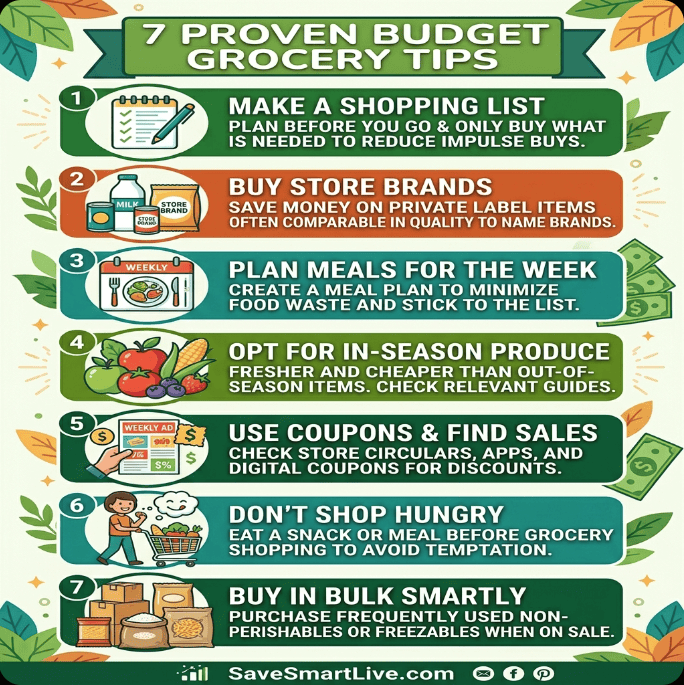
Tip 1: Always shop with a list and never deviate from it. Impulse purchases are the number one budget killer at the grocery store. Write your list before you go and buy only what’s on it. Leave the credit card at home and bring exactly $50 in cash if you need the discipline.
Tip 2: Buy whole ingredients, not pre-made foods. A whole chicken costs $5.50 and feeds your family three meals. A rotisserie chicken costs $7 and feeds one dinner. Pre-cut vegetables cost twice as much as whole ones. Shredded cheese costs more than a block you grate yourself.
Tip 3: Cook in bulk and repurpose leftovers. Monday’s roast chicken becomes Tuesday’s sandwiches and Wednesday’s soup. Tuesday’s taco beans become Wednesday’s burritos. Cooking once and eating twice is the key to saving both money and time.
Tip 4: Never throw away food. Wilting vegetables go into soup. Stale bread becomes breadcrumbs or croutons. Overripe bananas become oatmeal topping. Leftover rice becomes fried rice. Train yourself to see every scrap as an ingredient, not as trash.
Tip 5: Eat breakfast for dinner sometimes. Scrambled eggs, pancakes, or oatmeal for dinner is perfectly fine. It’s nutritious, it’s cheap, and most kids love it. Nobody is judging you for serving breakfast at 6 PM.
Tip 6: Drink water. This sounds obvious, but beverages are one of the sneakiest budget drains. Juice, soda, flavored waters, and specialty drinks add $15 to $30 per week for a family. Tap water is free.
Tip 7: Shop at discount grocers. Aldi, Lidl, WinCo, and Walmart consistently have the lowest grocery prices. The same cart that costs $50 at Aldi might cost $75 to $90 at a traditional grocery chain.
Pro Tip: Plan your meals around what’s on sale that week, not the other way around. Check the weekly flyer before you make your meal plan. If chicken thighs are on sale for $0.99/lb, build three meals around chicken. If ground beef is discounted, make it a taco and spaghetti week.
Can You Actually Feed a Family on $50 a Week Long-Term?
Honestly? $50 a week every single week is tough for a family of four, especially if you want variety and nutritional balance. It’s absolutely doable, but it requires consistent planning, minimal food waste, and a willingness to eat simple meals.
A more sustainable long-term budget for a family of four is $60 to $80 per week, which gives you more room for variety, fresh produce, and the occasional treat that keeps everyone happy.
That said, knowing you can feed your family for $50 in a pinch is powerful. It means that during tight months — unexpected bills, reduced hours, job transitions — you have a plan. You know exactly what to buy, what to cook, and how to stretch every dollar.
And many of the meals in this plan are genuinely delicious enough to stay in your regular rotation even when money isn’t tight. Our family still makes that fried rice every week, not because we have to, but because we want to.
Frequently Asked Questions
Can I customize this meal plan for dietary restrictions?
Absolutely. If someone in your family doesn’t eat meat, replace the chicken and ground beef with extra beans, lentils, eggs, and tofu. If someone is gluten-free, swap bread and pasta for rice and potatoes (both already in the plan). The framework is flexible — just keep the principle of buying whole, cheap ingredients and cooking from scratch.
What if I don’t have basic pantry staples?
Your first week might cost $60 to $65 instead of $50 because you’ll need to buy cooking oil, basic spices (salt, pepper, garlic powder, cumin, Italian seasoning), flour, sugar, and baking powder. But these staples last for months, so every week after that stays at or below $50.
Is this plan nutritionally adequate for kids?
This plan includes protein (chicken, eggs, beans, tuna, beef), vegetables (broccoli, carrots, cabbage, potatoes, corn, tomatoes), fruits (apples, bananas), dairy (milk, cheese), and whole grains (oats, rice, bread). It covers the major food groups well. For growing kids who need extra nutrition, adding a daily multivitamin is a good insurance policy and costs less than $5 per month.
How much time does cooking take each day?
Most dinners take 20 to 40 minutes of active cooking time. Monday’s roast chicken is the most time-intensive (about 15 minutes prep plus hands-off roasting time). Lunches are mostly leftovers or sandwiches requiring minimal prep. Breakfasts are 5 to 10 minutes.
Can I meal prep everything on Sunday?
You can prep many components in advance — cook rice, soak beans, chop vegetables, make chicken broth. But some meals taste best cooked fresh (fried rice, quesadillas, scrambled eggs). A hybrid approach works best: prep the building blocks on Sunday, then assemble and cook fresh each day.
What if my family is bigger or smaller?
For a family of two, cut the grocery list roughly in half (total around $25 to $30). For a family of six, increase proteins and starches by about 50% (total around $70 to $80). The meals scale easily — just adjust quantities.
Your Kitchen Is Your Greatest Financial Tool
Here’s something that took me way too long to realize. The kitchen is the most powerful money-saving tool in your home. Not your savings account. Not your budgeting app. Your kitchen.
Every meal you cook at home instead of ordering out saves $10 to $30. Every lunch you pack instead of buying saves $8 to $15. Every snack you make instead of grabbing from a convenience store saves $3 to $5.
Over a year, a family that cooks at home regularly saves $5,000 to $10,000 compared to one that relies on dining out and convenience food. That’s not an exaggeration — do the math on your own bank statement and you’ll see.
This $50 meal plan isn’t just about surviving a tight week. It’s proof that eating well doesn’t require spending a fortune. It’s a skill that, once you develop, pays dividends for the rest of your life.
So print the grocery list. Hit the store. And cook something tonight that your family will love — for a fraction of what it would cost at a restaurant.
Your wallet will thank you. And your family will be too busy enjoying dinner to notice the difference.

Love this meal plan? Pin it to your meal planning board and share it with a friend who’s trying to save on groceries. For more budget-friendly tips, visit SaveSmartLive.com.
Related articles:
- How to Create a Monthly Budget That Actually Works
- 15 Money Saving Challenges to Try in 2026
- 10 Things to Stop Buying to Save $500 a Month
- How to Save Money on Groceries (20 Hacks That Work)
Read More : 20 Realistic Side Hustles That Pay $500 or More Per Month in 2026