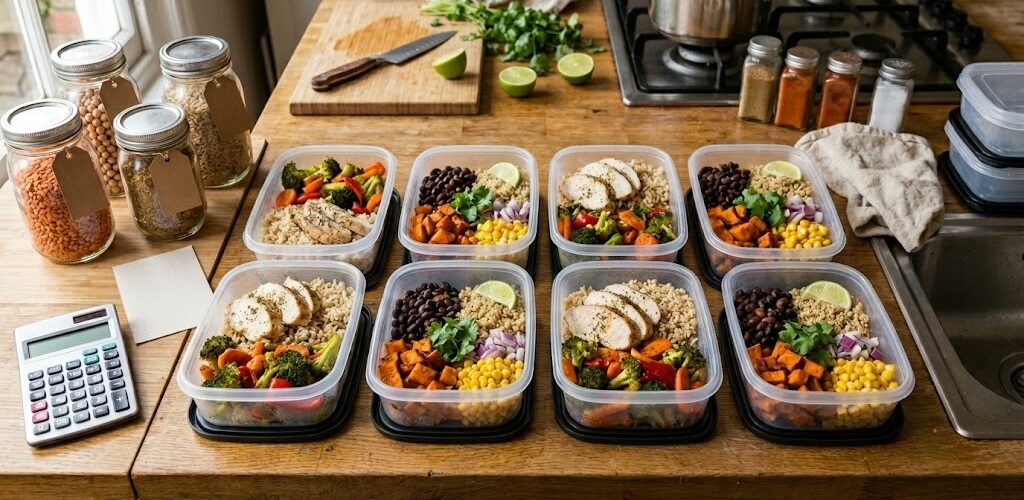
Meal Prep on a Budget
Let’s be honest about what happens on a busy Tuesday night when there’s nothing ready to eat at home.
You open the fridge, stare at some random ingredients that don’t obviously go together, close it, and order delivery. Again. By the time the food arrives, you’ve spent $20–$30 on what should have been an $8 meal — and you’ve done it three times this week without even thinking about it.
This is where meal prep changes everything.
Meal prepping doesn’t have to be complicated. You don’t need fancy containers, a meal planning app, or hours in the kitchen every Sunday. You need a simple system — and this guide gives you exactly that, from scratch, designed for beginners who want to spend less money on food without eating sad, boring meals.
In 2026, with grocery prices running 15–25% higher than just a few years ago and a casual restaurant dinner for two routinely running $60–$80 with tip, cooking ahead isn’t just convenient. It’s one of the most effective money-saving habits you can build.
What Is Meal Prep, Really?
Meal prep is simply the practice of preparing food in advance so it’s ready to eat (or quick to finish cooking) during the week.
It doesn’t have to mean cooking seven individual meal containers on Sunday and eating the same thing every day until Friday. That version exists, but it’s just one approach.
Meal prep can look like:
- Ingredient prep: Chopping vegetables, cooking a batch of rice or grains, and portioning proteins ahead of time so weeknight cooking takes 10 minutes instead of 40
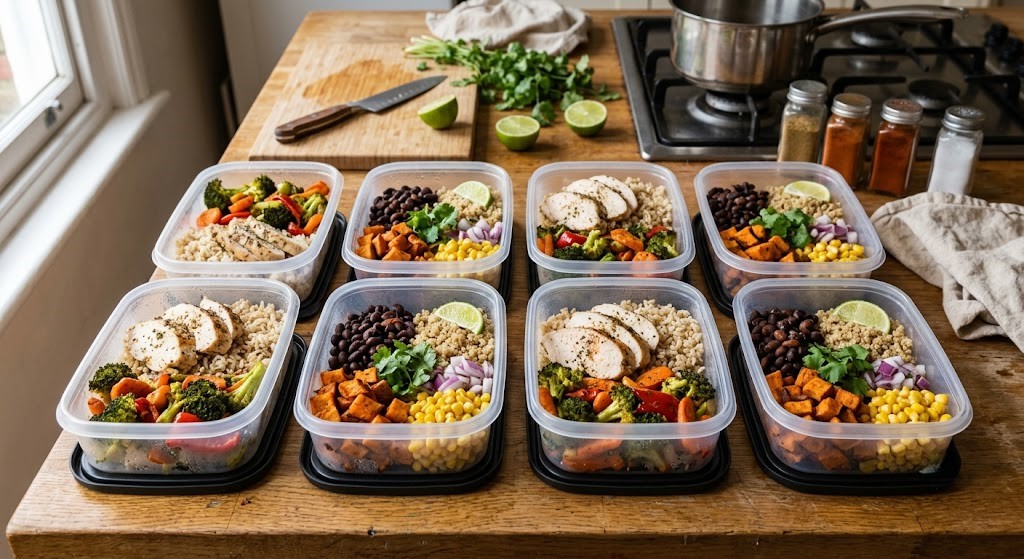
- Full meal prep: Cooking complete meals and portioning them into containers to reheat throughout the week
- Batch cooking: Making large quantities of one or two dishes that can be eaten as different meals (soup on Monday, same soup as a side on Wednesday)
- Mix of all three: Which is what most people actually do
You get to decide what “meal prep” means for your schedule and your eating habits. The goal isn’t a perfect system — it’s having something ready to eat that didn’t come from a delivery app.
Why Meal Prep Saves Real Money
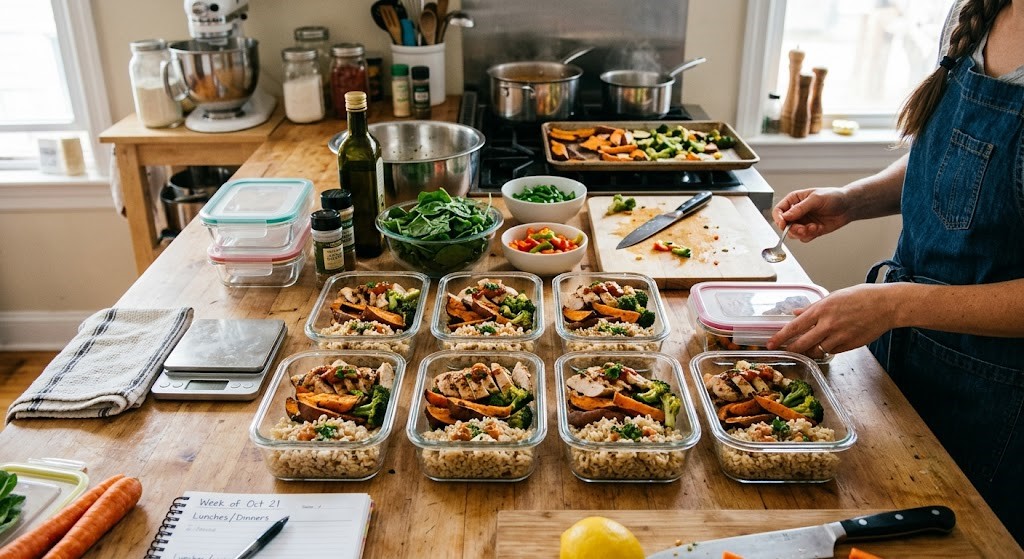
The savings from meal prepping are documented and consistent. Here’s where the money comes from:
1. You stop buying convenience. Pre-cut vegetables, marinated proteins, and single-serving packaged meals all cost significantly more per serving than whole ingredients you prep yourself. A 5-minute knife session saves you 30–40% on produce alone.
2. You avoid the Tuesday takeout trap. When there’s nothing ready to eat, takeout happens. One meal prep session per week can eliminate 3–4 instances of impulse takeout. At $20–$30 per order, that’s $60–$120 saved in a single week.
3. You waste less food. According to the USDA, American households waste an estimated 30–40% of the food they buy. Meal prep almost eliminates this because ingredients are planned, purchased with purpose, and used completely before they spoil.
4. You shop smarter. When you know exactly what you’re cooking, you buy exactly what you need. No random purchases that “might come in handy.” No extra trips to the store mid-week.
Research suggests consistent meal preppers save upwards of $100–$200 per month on food costs compared to unplanned eating habits. Over a year, that’s a meaningful number.
The Beginner’s Biggest Mistake
Before getting into the how-to, one warning: don’t overcomplicate your first few weeks.
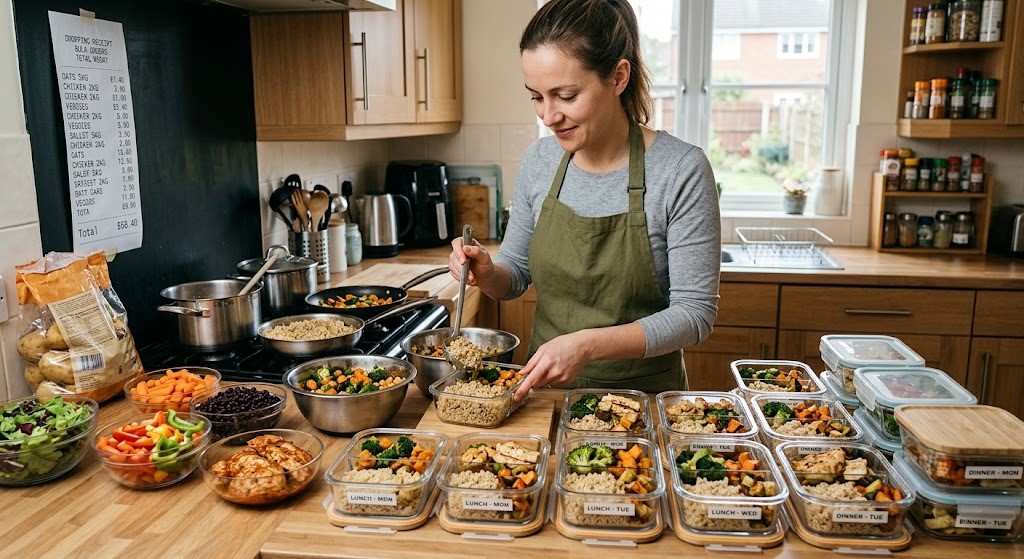
The most common beginner mistake is planning seven completely different meals for the week. Seven recipes means seven different sets of ingredients, seven different prep techniques, and a Sunday session that takes four hours and burns you out completely.
The smarter approach: plan 3–4 meals with overlapping ingredients. When the same chicken, the same rice, and the same vegetables appear in multiple dishes, you’re buying less variety, wasting less, and spending less time cooking.
You’re not making seven different things — you’re making a few versatile things that combine in different ways across the week.

Step 1: Pick Your Prep Day and Time
Choose one day and a realistic time window. For most people, Sunday afternoon (2–4 hours) or Sunday evening (1.5–2 hours) works best. Some prefer Saturday morning.
The time you actually need depends on what you’re making:
- Beginner prep session: 60–90 minutes for 2–3 recipes
- Intermediate prep session: 2–3 hours for 4–5 recipes
- Full batch cooking day: 3–4 hours for a complete week of meals
If you’ve never done this before, start with 90 minutes. Plan 2–3 simple things. Keep it manageable enough that you actually do it again next week.
Step 2: Plan Your Meals Around Cheap Staples
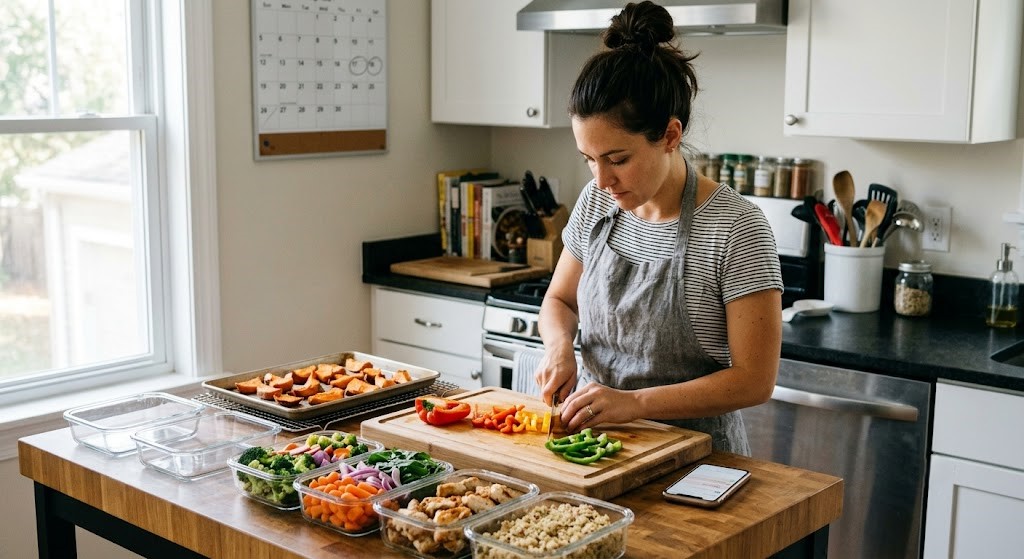
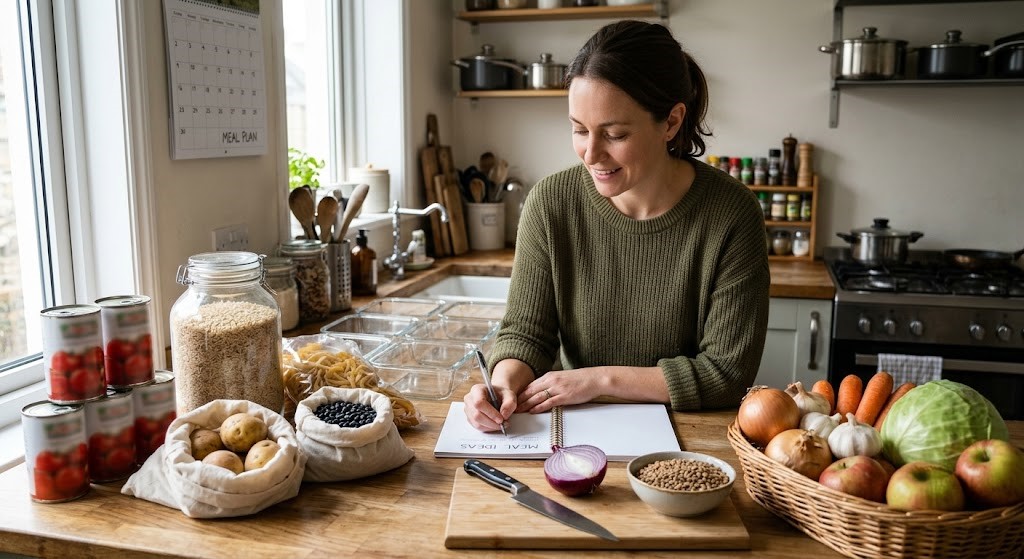
Budget meal prep starts at the grocery store — specifically with choosing ingredients that are affordable, versatile, and pack nutritional value.
The budget meal prep pantry essentials:
Proteins (choose 1–2 per week):
- Chicken thighs (cheaper than breasts, more flavor)
- Eggs
- Canned tuna or canned salmon
- Dried or canned lentils and beans
- Ground turkey or ground beef (buy in bulk when on sale)
Carbs and grains (the foundation of most meals):
- White or brown rice
- Pasta
- Oats (for breakfasts)
- Potatoes or sweet potatoes
- Bread (for quick lunches)
Vegetables (seasonal = cheapest):
- Frozen spinach, peas, broccoli, mixed veg (just as nutritious as fresh, much cheaper)
- Cabbage, carrots, onions (last a long time, low cost)
- Canned tomatoes (pantry staple for dozens of dishes)
Flavor builders (buy once, use for months):
- Olive oil or vegetable oil
- Garlic powder, onion powder, cumin, paprika, Italian seasoning
- Soy sauce, hot sauce, vinegar
- Bouillon cubes or low-sodium broth
With these staples, you can make dozens of different meals at very low cost per serving. The key is combining them in different ways throughout the week so nothing feels repetitive.
Step 3: Build Your Weekly Meal Plan
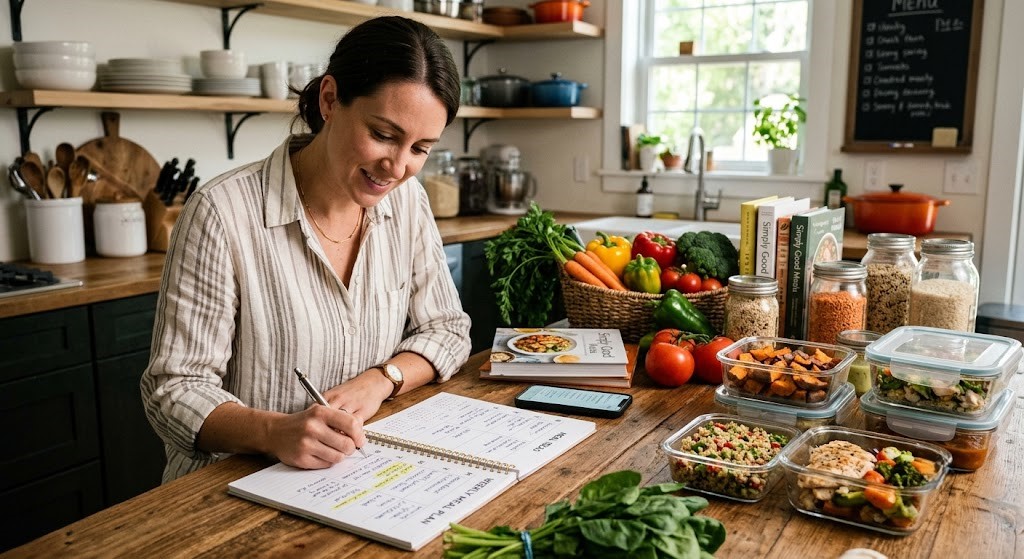
Here’s a simple beginner template for two people, aiming for under $60–$70 for the full week including breakfasts, dinners, and lunches from leftovers.
Sample Budget Week:
| Day | Dinner | Notes |
|---|---|---|
| Sunday | One-pot chicken and rice | Make double — feeds Monday lunch too |
| Monday | Bean and veggie tacos | Cheap, quick, family-friendly |
| Tuesday | Pasta with canned tomato sauce + protein | Fast to make, easy to scale |
| Wednesday | Lentil soup | Big batch — use as lunch Thursday |
| Thursday | Egg fried rice (using leftover rice) | Uses Sunday’s leftover rice |
| Friday | Tuna pasta or simple quesadillas | Under 15 minutes |
| Saturday | Use up fridge leftovers | “Clean out the fridge” night |
Breakfasts: Overnight oats (prep 5 jars on Sunday — done for the week). Or scrambled eggs, which take 5 minutes.
Lunches: Leftovers from the previous night’s dinner. No extra cooking required.
This plan uses chicken, rice, beans, lentils, pasta, eggs, and frozen/canned vegetables across multiple dishes. You’re buying a small number of ingredients and using them efficiently across the entire week.
Step 4: Shop With a List and a Budget
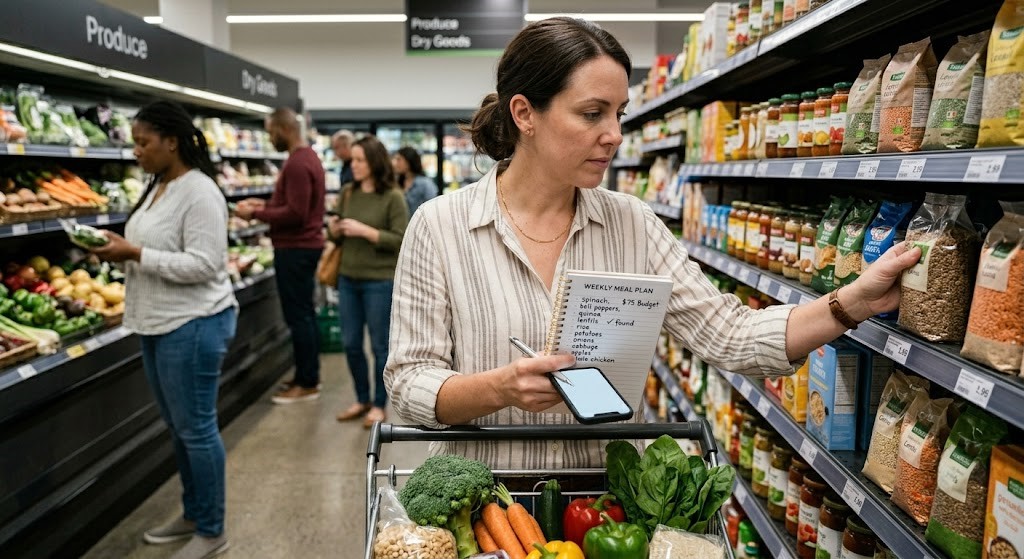
Before you go to the store, write your complete grocery list based on your meal plan. Check what you already have in your pantry and fridge — only buy what you actually need.
Budget shopping tips for meal prep:
- Buy proteins in bulk and freeze what you don’t need this week. A large pack of chicken thighs split into two portions saves significantly per pound compared to buying smaller packs.
- Compare price per unit, not package price. The larger can isn’t always the better deal — check the shelf tag.
- Frozen vegetables are your best friend. Same nutrition, fraction of the cost, and nothing goes bad mid-week.
- Generic brands for pantry staples. Rice, pasta, canned beans, cooking oil — these are identical to name brands in most cases.
- Shop with a hard budget. Decide your grocery limit before you go in and stick to it.
A realistic budget for two people meal prepping on a budget: $50–$70 per week for full meals. Single person: $30–$45 per week.
Step 5: Your First Prep Session (Step by Step)
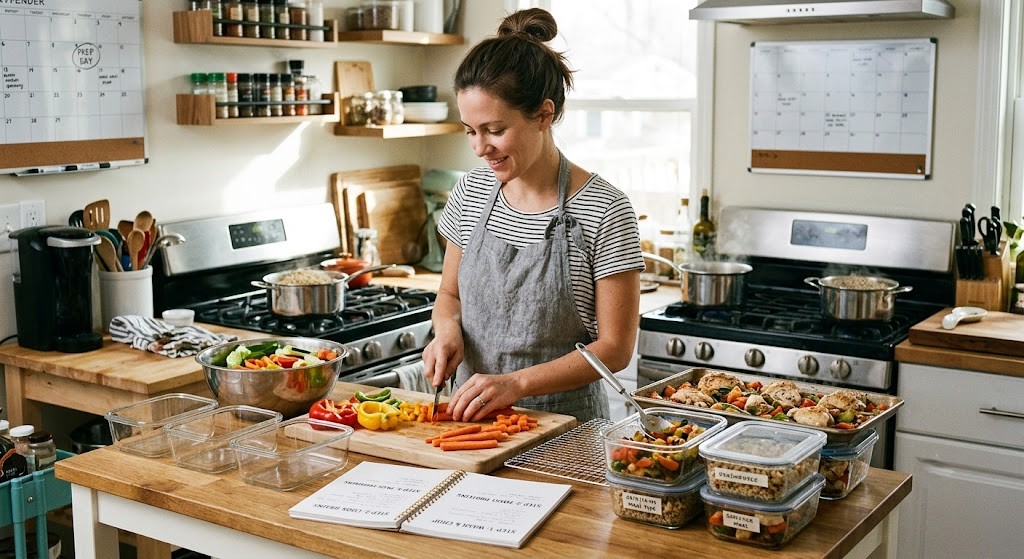
Here’s exactly how to run a beginner prep session in 90 minutes:
Minutes 0–10: Get organized
- Read through your recipes
- Get out all ingredients, pots, pans, and containers
- Preheat oven if needed
- Start water boiling for rice or pasta
Minutes 10–30: Start the longest-cooking items first
- Put chicken in the oven or on the stove
- Start a pot of rice or lentils simmering
- These cook with almost no attention while you do other things
Minutes 30–60: Prep vegetables and secondary components
- Chop all vegetables for the week at once (onions, carrots, peppers) — store in containers in the fridge
- Cook any pasta or grains that need attending
- Hard boil eggs if using
Minutes 60–80: Assemble and portion
- Pull proteins from heat and let rest
- Portion rice, proteins, and veg into containers
- Label containers with the meal name and day
Minutes 80–90: Clean up and store
- Put everything in the fridge or freezer
- Clean as you go throughout to make this faster
You now have food ready for most of the week — in 90 minutes.
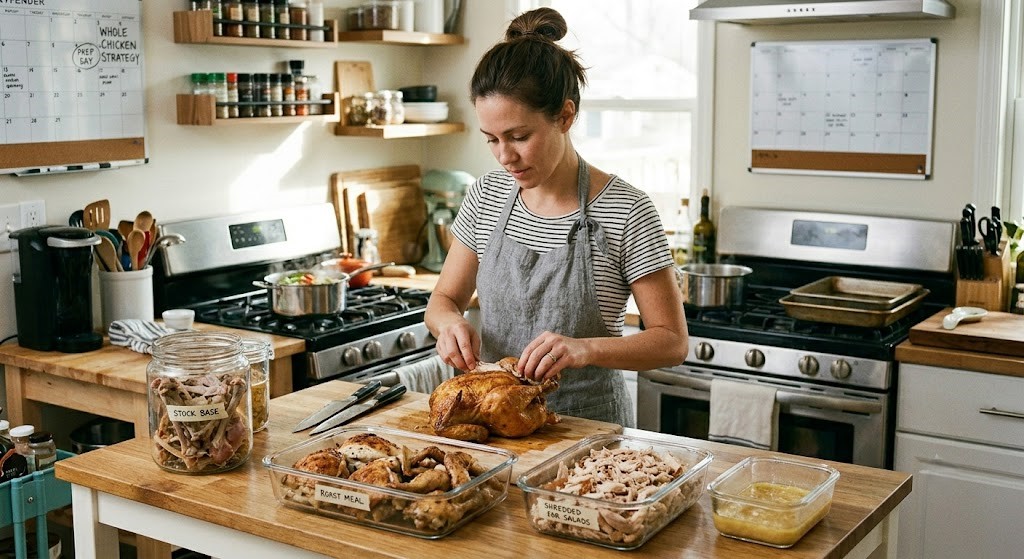
The Whole Chicken Strategy (Maximum Value)
One of the best budget meal prep techniques is the whole chicken approach.
A whole roasted chicken (around $8–$12 depending on size) yields enough meat for 4–5 different meals:
- Meal 1: Roasted chicken dinner with vegetables (Sunday)
- Meal 2: Chicken and rice bowl with the breast meat (Monday)
- Meal 3: Chicken tacos with thigh meat (Tuesday)
- Meal 4: Chicken soup made from the carcass and remaining bits (Wednesday)
- Meal 5: The soup broth serves as a base for a rice pilaf or another dish (Thursday)
Five meals from one $8–$12 purchase. This is what efficient budget cooking actually looks like — not buying cheap ingredients, but using what you buy completely and creatively.
What Containers Do You Actually Need?
You don’t need an expensive matching set. You need:
- Glass or plastic containers with lids in 2 or 3 sizes — 1-cup for snacks and sides, 2-cup for full meals, 4-cup for large batches and soups
- Mason jars for overnight oats, salads, and sauces (very cheap at grocery stores or dollar stores)
- Freezer-safe bags or containers for anything you’re not eating within 4 days
That’s it. Start with what you have — repurposed takeout containers, old Tupperware, whatever’s available. Buy better containers gradually as needed.
How Long Does Prepped Food Last?
| Food Type | Fridge | Freezer |
|---|---|---|
| Cooked chicken/meat | 3–4 days | 3–4 months |
| Cooked grains (rice, quinoa) | 4–6 days | 1–2 months |
| Cooked pasta | 3–5 days | 2–3 months |
| Soups and stews | 4–5 days | 3–6 months |
| Chopped raw vegetables | 3–5 days | (blanch first) |
| Overnight oats | 5 days | Not recommended |
Safety rule: If anything smells off, looks different, or has been in the fridge longer than 5 days — throw it out. Food safety first, always.
Budget Meal Prep Recipes to Start With
These are beginner-friendly, cheap, and genuinely good:
1. One-Pot Chicken and Rice Chicken thighs, rice, broth, garlic, any vegetables. Everything in one pot. Under $2 per serving.
2. Lentil Soup Red lentils, canned tomatoes, onion, garlic, cumin, broth. Costs about $0.60–$0.80 per serving. Incredibly filling.
3. Overnight Oats Rolled oats, milk (or water), chia seeds, a little honey, fruit. Prep 5 jars in 10 minutes on Sunday. Breakfast sorted for the week for about $0.50 per serving.
4. Bean and Rice Bowls Canned black beans, rice, salsa, cheese, whatever vegetables you have. Under $1.50 per serving. Highly customizable.
5. Pasta with Tomato Sauce Pasta, canned crushed tomatoes, garlic, olive oil, Italian seasoning. Add ground meat if budget allows. Under $1.50 per serving.
Common Beginner Mistakes to Avoid
- Planning too many different recipes in week one. Start with 2–3. Simplicity is what makes you repeat it next week.
- Skipping labeling. Mystery containers get avoided and wasted. Label everything with the meal name and date.
- Buying fresh when frozen works fine. Frozen broccoli, spinach, peas, and corn are nutritionally equivalent to fresh and a fraction of the cost.
- Not checking the pantry first. You probably already have more than you think.
- Giving up after one rough week. The first session is always the slowest. By week three, you’ll have a system that runs on autopilot.
Final Thoughts
Meal prepping on a budget isn’t about eating perfectly. It’s about having a plan so that Tuesday night doesn’t turn into a $30 delivery order.
Start small. Pick two recipes for your first week. Spend 60–90 minutes on Sunday. See what life looks like when you open the fridge Monday evening and there’s actually something ready to eat.
That feeling — of not having to think about dinner, of not spending money out of desperation, of actually using everything you bought — is what keeps people coming back to meal prep week after week.
One session. That’s all it takes to start.
Read More :20 Realistic Side Hustles That Pay $500 or More Per Month in 2026