
Beginner Guide to Investing :
Start With Just $100
Have you ever looked at your bank account and thought, “I don’t have enough money to invest”? You’re not alone. Millions of people believe that investing is only for the rich — for people in suits sitting in glass offices on Wall Street. But here’s the truth nobody tells you: you can start investing with just $100, and that single decision could change your financial future forever.
This beginner investing guide 100 dollars is written for real people — people with regular jobs, regular salaries, and a genuine desire to build something better for themselves. No complicated jargon. No confusing charts. Just honest, practical advice that actually works.

Why Most People Never Start Investing (And Why That’s a Mistake)
Let’s be honest — the word “investing” sounds intimidating. It sounds like something that requires a financial advisor, a thick book of knowledge, and at least a few thousand dollars just to get started. Schools don’t teach it. Parents rarely talk about it. And the internet is flooded with so much confusing advice that most people just give up before they even begin.
But here’s what’s truly scary: not investing is actually the riskier choice. When your money sits in a regular savings account, inflation quietly eats away at its value every single year. The price of groceries, rent, and everyday items keeps going up — but your savings stay the same. Investing, on the other hand, gives your money the power to grow and fight back against inflation.
The biggest mistake beginners make is waiting. They say, “I’ll start when I have more money.” But time is the most powerful ingredient in investing. The sooner you start — even with just $100 — the longer your money has to grow through the magic of compound interest.
What Exactly Is Investing? (Simple Explanation for Beginners)
Before we talk about how to invest $100, let’s make sure we understand what investing actually means — in the simplest way possible.
Investing means putting your money to work so it earns more money for you.
When you keep $100 in your pocket, it stays $100. But when you invest that $100 wisely, it can grow into $150, $200, or even more over time — without you doing anything extra. You’re essentially letting your money earn money on its own.
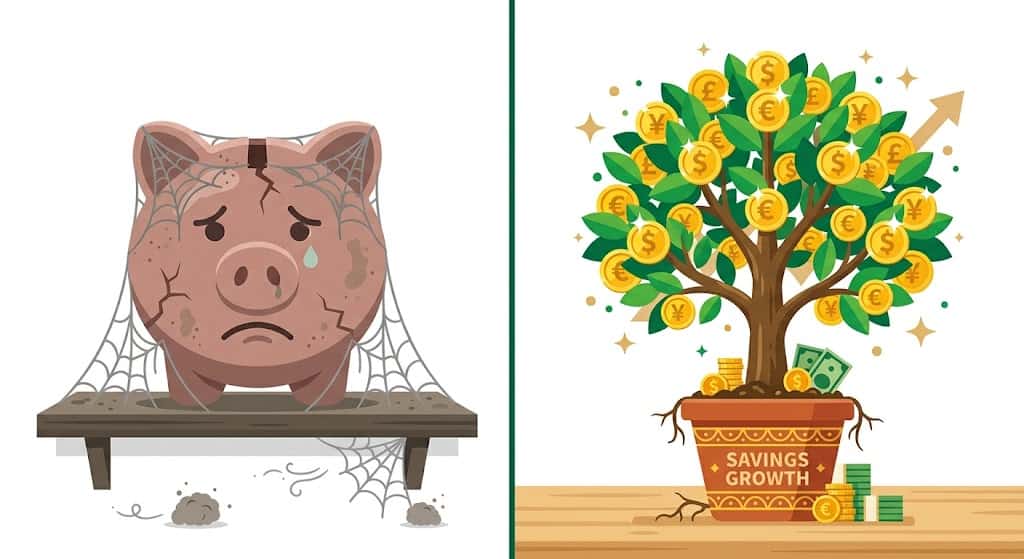
Think of it like planting a seed. You plant a small seed today, water it with patience, and over months and years, it grows into a tree. That tree then produces fruit — and the fruit produces more seeds. That cycle of growth is exactly how investing works. Your initial $100 is the seed. Compound interest is the water. And time is the sunshine that makes everything grow.
There are several ways to invest: stocks, bonds, mutual funds, index funds, real estate, and more. But for beginners — especially those starting with $100 — we’ll focus on the safest and most beginner-friendly options in this guide.

Is $100 Really Enough to Start Investing?
Absolutely — and we want to say that with complete confidence. In fact, $100 is a perfect starting point for beginners. Here’s why:
A few years ago, most brokerages required a minimum of $500 to $1,000 just to open an account. But today, thanks to modern investing apps and platforms, you can start with as little as $1. That means $100 gives you a real, meaningful head start.
More importantly, starting with $100 teaches you something no book ever can — real investing experience. You’ll learn how markets move. You’ll feel the emotions of seeing your portfolio go up and down. And you’ll develop the discipline and patience that successful investors all share. That experience is priceless, and you can’t get it by just reading about investing.
Here’s a motivating example: If a 25-year-old invests just $100 a month in an index fund with an average annual return of 8%, by the time they’re 65, they’ll have over $300,000. That’s the power of starting early — even with small amounts.

Step 1 — Set Your Financial Foundation First
Before you invest a single dollar, you need to make sure your financial foundation is solid. Think of investing like building a house. You wouldn’t start painting the walls before laying the foundation, right?
Here are three things to check before you invest your first $100:
1. Pay off high-interest debt first. If you have credit card debt with 20% interest, paying it off gives you a guaranteed 20% return — which is better than most investments. Focus on clearing high-interest debt before investing.
2. Build a small emergency fund. Life is unpredictable. Before investing, make sure you have at least $500–$1,000 saved separately for emergencies. This way, if something unexpected happens, you won’t need to sell your investments at a loss.
3. Make sure the $100 is money you won’t need immediately. Investing works best when you can leave your money alone for at least 3–5 years. Only invest money that you won’t need for short-term expenses like rent, food, or bills.
Once these three boxes are checked, you’re truly ready to start — and you’ll be investing with confidence, not anxiety.

Step 2 — Choose the Right Investment Account
Now that your foundation is set, it’s time to open an investment account. This is easier than most people think — it takes about 10 minutes and can be done entirely from your phone.
There are a few types of accounts to know about:
Brokerage Account: This is a regular investment account with no special rules or restrictions. You can invest in stocks, index funds, and ETFs. You can withdraw your money anytime. This is the most flexible option and perfect for beginners.
Roth IRA (for US residents): This is a retirement savings account with amazing tax benefits. You invest money after paying taxes on it, but your investments grow completely tax-free. If you’re planning for retirement, this is one of the best accounts to open. In 2024, you can contribute up to $7,000 per year.
Index Fund or Robo-Advisor Account: Some platforms like Betterment, Wealthfront, or Fidelity offer automated investing where a computer manages your investments for you based on your goals and risk tolerance. These are excellent for beginners who don’t want to pick individual stocks.
For most beginners starting with $100, we recommend opening a regular brokerage account on a beginner-friendly platform first. Get comfortable. Then you can explore other account types as you grow.
Step 3 — Pick the Best Investment for Beginners
Here’s the question everyone asks: “What should I actually buy with my $100?”
As a beginner, you don’t need to pick individual stocks or try to find the “next Amazon.” That strategy is risky, stressful, and rarely works even for experienced investors. Instead, the wisest and most time-tested strategy for beginners is investing in index funds.
What Are Index Funds?
An index fund is a type of investment that automatically tracks a large collection of stocks — like the top 500 companies in America (known as the S&P 500). Instead of betting on one company, you’re investing in hundreds of companies at once. This means if one company fails, it barely affects your investment — because you own a tiny piece of hundreds of others.
Index funds are:
- ✅ Low cost (very low fees)
- ✅ Diversified (spread across many companies)
- ✅ Historically reliable (the S&P 500 has averaged ~10% annual returns over decades)
- ✅ Beginner-friendly (no research needed)
Warren Buffett — one of the greatest investors of all time — has repeatedly said that for most people, a simple S&P 500 index fund is the best investment they can make. That’s a pretty strong endorsement.
With $100, you can buy a partial share of index funds like VOO (Vanguard S&P 500 ETF) or FZROX (Fidelity Zero Total Market Index) — both of which have extremely low fees and strong long-term track records.
Step 4 — Understand Risk and Stay Calm
Here’s something every beginner needs to hear: the stock market will go up and down. That is completely normal.
There will be days — maybe even weeks or months — when you check your investment account and see that your $100 has dropped to $85. This can feel terrifying, especially when you’re new. Your first instinct might be to sell everything and get out. But that instinct is almost always wrong.
Markets go through cycles. They drop — and then they recover. Historically, the stock market has always recovered from every single crash in history, including the 2008 financial crisis and the 2020 pandemic crash. The investors who stayed calm and kept their money invested through those difficult times came out ahead.
The key principle here is: don’t invest money you’ll need soon, and don’t panic when markets drop. Think of it this way — when prices drop, your investments are actually on sale. It’s a buying opportunity, not a reason to flee.
A useful mindset shift: instead of checking your portfolio every day, check it once a month or once a quarter. This reduces anxiety and helps you stay focused on your long-term goals rather than short-term fluctuations.

Step 5 — Make It a Habit: Invest Consistently
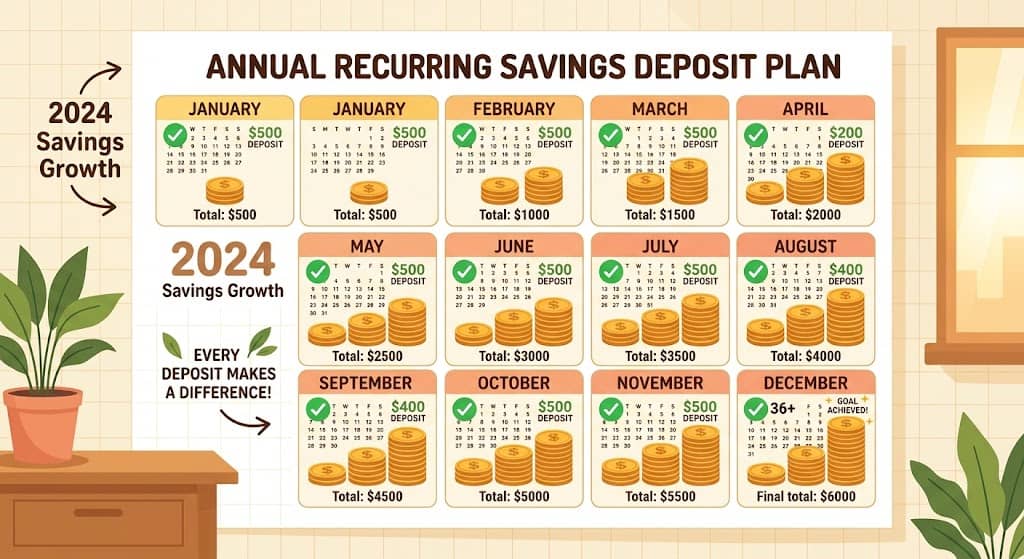
The real secret to building wealth isn’t picking the perfect stock. It’s consistency. Investing a little bit regularly — even $25 or $50 a month — is far more powerful than trying to invest a large lump sum once a year.
This strategy is called Dollar-Cost Averaging (DCA). Here’s how it works:
Instead of investing all your money at once (and worrying about whether the timing is right), you invest a fixed amount every month — no matter what the market is doing. Some months you’ll buy at a higher price. Some months you’ll buy at a lower price. Over time, these prices average out, reducing your overall risk.
For example:
- Month 1: Invest $100 → Price is $50/share → You get 2 shares
- Month 2: Invest $100 → Price drops to $25/share → You get 4 shares
- Month 3: Invest $100 → Price rises to $40/share → You get 2.5 shares
By the end of 3 months, you’ve invested $300 and own 8.5 shares with an average cost of about $35 per share. If the price rises above $35, you’re in profit — even though the price went down in the middle.
Set up automatic monthly investments so you never have to think about it. Treat it like a bill you pay yourself every month. Most investing apps make this incredibly easy with an auto-invest feature.
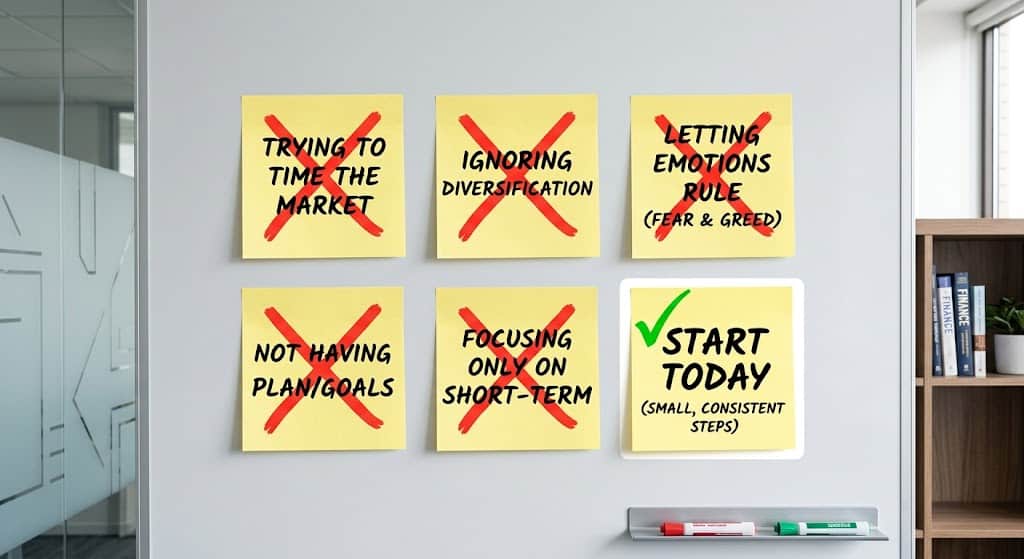
Common Investing Mistakes Beginners Make (Avoid These!)
Now that you know what to do, let’s talk about what not to do. These are the most common mistakes beginners make — and knowing about them in advance could save you a lot of money and frustration.
Mistake #1: Trying to “Time the Market” Many beginners try to buy at the lowest point and sell at the highest. Even professional fund managers consistently fail at this. Don’t try to predict the market. Just invest regularly and stay patient.
Mistake #2: Investing in Something They Don’t Understand If someone tells you to invest in a cryptocurrency, a “hot stock,” or a business opportunity that sounds too good to be true — slow down. Only invest in things you genuinely understand. If you can’t explain how it makes money, don’t put your money into it.
Mistake #3: Checking the Portfolio Too Often Watching your portfolio every day is a recipe for anxiety. Markets fluctuate daily. If you check too often, you’ll be tempted to make emotional decisions that hurt your returns. Set it, check it occasionally, and let it grow.
Mistake #4: Giving Up After a Loss Every investor has experienced losses. The difference between successful investors and failed ones is that successful investors learn from losses and keep going. A temporary loss is not a failure — quitting is.
Mistake #5: Not Starting at All This is the biggest mistake of all. The “perfect time” to invest never comes. The best time to start was yesterday. The second best time is today. With just $100, you can begin your investing journey right now.
How Your $100 Can Grow Over Time
Let’s end with some real motivation. Here’s what happens to your money when you invest $100 initially and then add just $50 per month into an index fund with an average annual return of 8%:
| Years | Total Invested | Portfolio Value |
|---|---|---|
| 5 Years | $3,100 | ~$3,672 |
| 10 Years | $6,100 | ~$9,208 |
| 20 Years | $12,100 | ~$29,647 |
| 30 Years | $18,100 | ~$74,518 |
| 40 Years | $24,100 | ~$174,000+ |
Notice something incredible? After 40 years, you invested about $24,000 of your own money — but your portfolio grew to over $174,000. That extra $150,000? That’s compound interest doing its job silently, every single day, while you lived your life.
The numbers don’t lie. Small, consistent investments made early in life create extraordinary results over time. You don’t need to be wealthy to start investing. You need to start investing to become wealthy.

Final Thoughts: Your $100 Is the Beginning of Everything
You’ve made it to the end of this guide, and that already puts you ahead of most people. Most people think about investing but never take that first step. You’re different — because now you have the knowledge, the strategy, and the tools to actually begin.
Here’s your action plan, simplified:
- ✅ Make sure your financial foundation is solid
- ✅ Open a beginner-friendly brokerage account
- ✅ Invest your first $100 into an S&P 500 index fund
- ✅ Set up automatic monthly contributions (even $25–$50 helps)
- ✅ Stay calm, stay consistent, and let time do the heavy lifting
Remember: every great investor started exactly where you are right now — at the beginning, with a small amount of money and a big desire to build something better. The only difference between them and someone who never built wealth? They started.
Your $100 is not just money. It’s a decision. A commitment. The first brick in the financial future you’re building for yourself. Start today. Your future self will thank you.

Disclaimer: This article is for educational and informational purposes only and does not constitute financial advice. Always consult a qualified financial advisor before making investment decisions. Investing involves risk, including the possible loss of principal.
Read More : How to Improve Your Credit Score Fast: 7 Proven Steps That Actually Work
