
Save Money on Groceries
Grocery prices have gone up nearly 20% over the past four years. That’s not a small jump. For a family spending $800 a month on food, that’s an extra $160 every single month compared to what they were spending just a few years ago.
And yet, most people are still shopping the same way they always have — walking in without a plan, grabbing what looks good, and wincing at the total at checkout.
The good news? You don’t need to eat bland food or coupon for three Save Money on Groceries hours a week to bring that bill down. You just need a smarter system.
Here are 20 grocery savings hacks that actually work in 2026 — tested by real families, not personal finance robots.
Save Money on Groceries
1. Set a Hard Budget Before You Walk In
This sounds obvious. Most people skip it anyway.
Before your next grocery run, write down your spending limit for that trip. Then stick to it.
If you struggle with overspending on a card, try a different approach: take out cash in the exact amount of your budget. When the cash runs out, the shopping stops. It sounds old-fashioned, but it works surprisingly well — because physical money feels real in a way that swiping doesn’t.

Save Money on Groceries
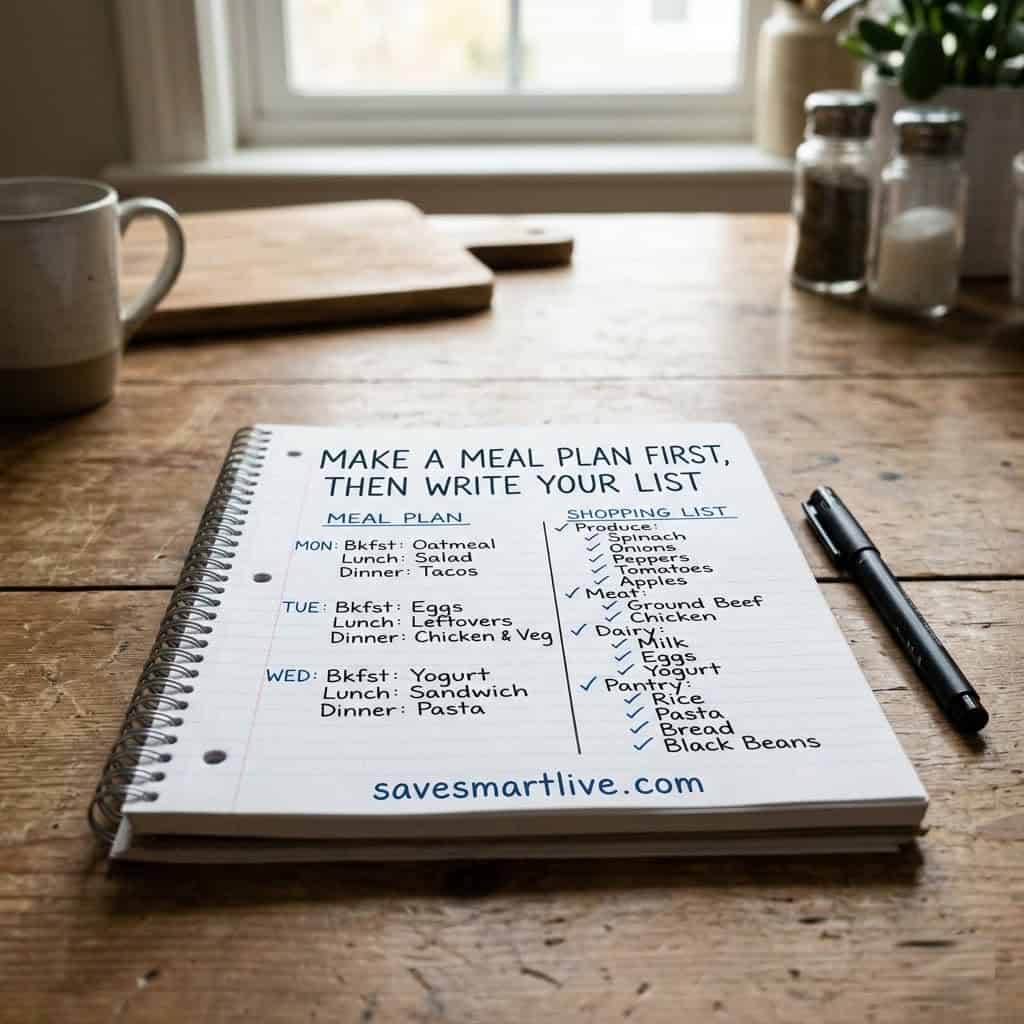
2. Make a Meal Plan First, Then Write Your List
One of the biggest reasons grocery bills stay high is buying food that doesn’t turn into meals.
You grab chicken, vegetables, some pasta — but with no plan, half of it sits in the fridge until it goes bad. Meanwhile you’re ordering takeout because “there’s nothing to eat.”
Spend 15–20 minutes on Sunday planning your meals for the week. Just dinners is enough — breakfasts and lunches are usually simpler to wing. Write down exactly what ingredients each meal needs, check what you already have, and only buy what’s missing.
This one habit alone can save a family $200 or more per month.
3. Never Shop Hungry
This is not a myth. Research consistently shows that people spend significantly more when they shop hungry — they buy more snacks, more impulse items, and more food in general.
Eat something before you go. Even a piece of fruit or a handful of crackers makes a real difference in how you shop.
4. Shop at Aldi or Lidl
If you’re not already shopping at a discount grocery store, this is the single biggest change you can make right now.
Recent Consumer Reports data found that prices at Aldi and Lidl are more than 8% lower than Walmart — and Walmart is already cheaper than most traditional supermarkets. That’s a meaningful difference when you’re spending hundreds of dollars a month.
More than 90% of Aldi’s products are store brands — but that’s actually the point. The quality is solid, the prices are much lower, and most people who switch say they don’t miss the name brands at all.
If Aldi isn’t nearby, Walmart, WinCo, or ethnic grocery stores (Asian, Hispanic, Indian) are also typically cheaper than mainstream chains for produce and staples.

5. Buy Store Brands Instead of Name Brands
Speaking of store brands — make the switch wherever you can.
For most pantry staples, the generic version is made in the same factories as the name brand. The only real difference is the label. One financial analysis found that choosing store brands for just three dinners a week can save a family of four over $500 per year.
Start with: canned goods, pasta, rice, cereal, cheese, butter, and frozen vegetables. These are categories where you’ll rarely notice a quality difference.
Keep buying the name brand only for the things where you genuinely taste or notice a difference. For everything else, go generic.

6. Check the Price Per Unit, Not the Package Price
This is a skill that changes how you shop forever.
Stores are required to show the price per ounce, per pound, or per unit on the shelf tag. Most people ignore this and just compare the sticker prices. But a bigger package isn’t always the better deal — and a smaller package isn’t always more expensive per serving.
Before grabbing something off the shelf, glance at the unit price. It takes two seconds and can regularly save you 10–20% per item.
7. Shop the Perimeter for Fresh Food, the Middle for Staples
The layout of most grocery stores follows a pattern: fresh produce, meat, dairy, and bakery are around the edges. Processed, packaged, and expensive convenience foods are in the middle aisles.
A simple rule: start with the perimeter for your fresh ingredients, then go into the middle aisles only for specific items on your list. Don’t browse the center aisles without a reason — that’s where impulse buys live.

8. Use the Store’s Loyalty Program
Every major grocery chain has a loyalty program in 2026. Most of them are free. Most people don’t use them consistently.
These programs offer:
- Weekly digital coupons personalized to your shopping habits
- Points that turn into store credit
- Discounts on gas at affiliated stations
- Early access to sale prices
Sign up, link your account to the store app, and clip digital coupons before each trip. It takes five minutes and can regularly take $10–$30 off your bill.

9. Use Cashback Apps on Top of Store Discounts
After you’ve used your store’s loyalty program, you can layer on cashback apps for additional savings on the same items.
Apps like Ibotta, Fetch Rewards, and Rakuten offer rebates on specific grocery items. You buy the item, scan your receipt, and the cash goes into your account.
It’s not dramatic money per trip — maybe $3–$8 — but over a month it adds up. And combining store loyalty discounts with cashback apps means you’re getting double savings on the same purchase.

10. Buy Frozen Fruits and Vegetables
Fresh produce is expensive, especially out of season. And a depressing amount of it ends up in the trash before it gets used.
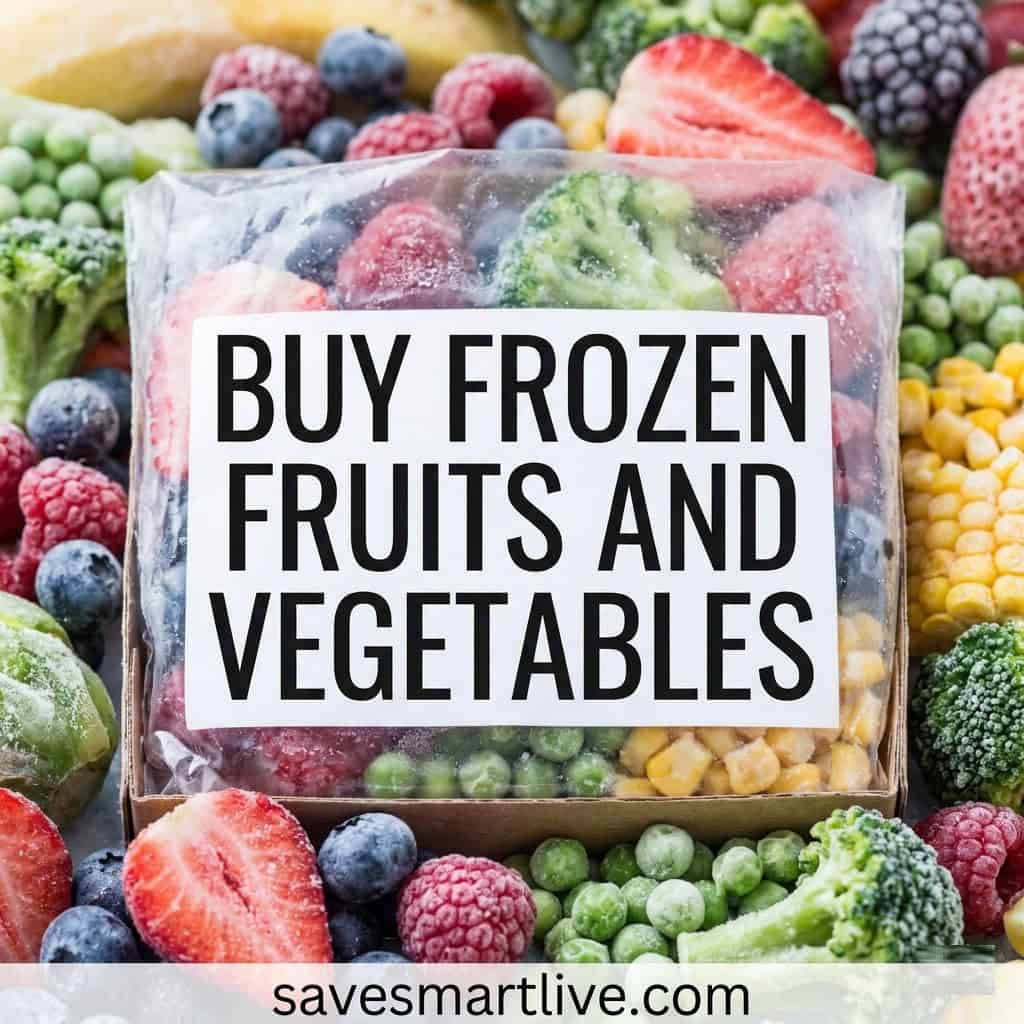
Frozen fruits and vegetables are picked and frozen at peak ripeness — meaning they’re often more nutritious than fresh produce that’s been sitting in transport for days. They’re significantly cheaper. And they last for months, so nothing goes to waste.
Keep your freezer stocked with frozen spinach, broccoli, mixed vegetables, peas, berries, and mango. Use them for smoothies, stir-fries, soups, and side dishes. The savings are real and the quality is better than most people expect.
11. Reduce Food Waste — It’s Like Finding Free Money
The USDA estimates that 30–40% of the food supply ends up as waste. If that’s even roughly true in your kitchen, reducing it is the single biggest financial opportunity in your grocery budget.
Think about it: if you’re wasting 30% of what you buy, you could cut your grocery bill by 30% just by actually using what you purchase.
Ways to waste less:
- Do a “fridge audit” before every shopping trip — use up what’s already there first
- Store vegetables properly (most last longer in the crisper drawer with the right humidity)
- Freeze bread, meat, and leftovers before they go bad
- Keep a running list on your fridge of what’s inside so you don’t forget it

12. Plan One “Leftover Night” Per Week
Pick one night per week — Thursday works well for many families — where dinner is made entirely from leftovers and whatever is already in the fridge.
This forces you to use up produce before it turns, reduces the number of meals you need to fully plan and shop for, and cuts your grocery needs for the week without you even noticing. It also cuts down on food waste dramatically over time.

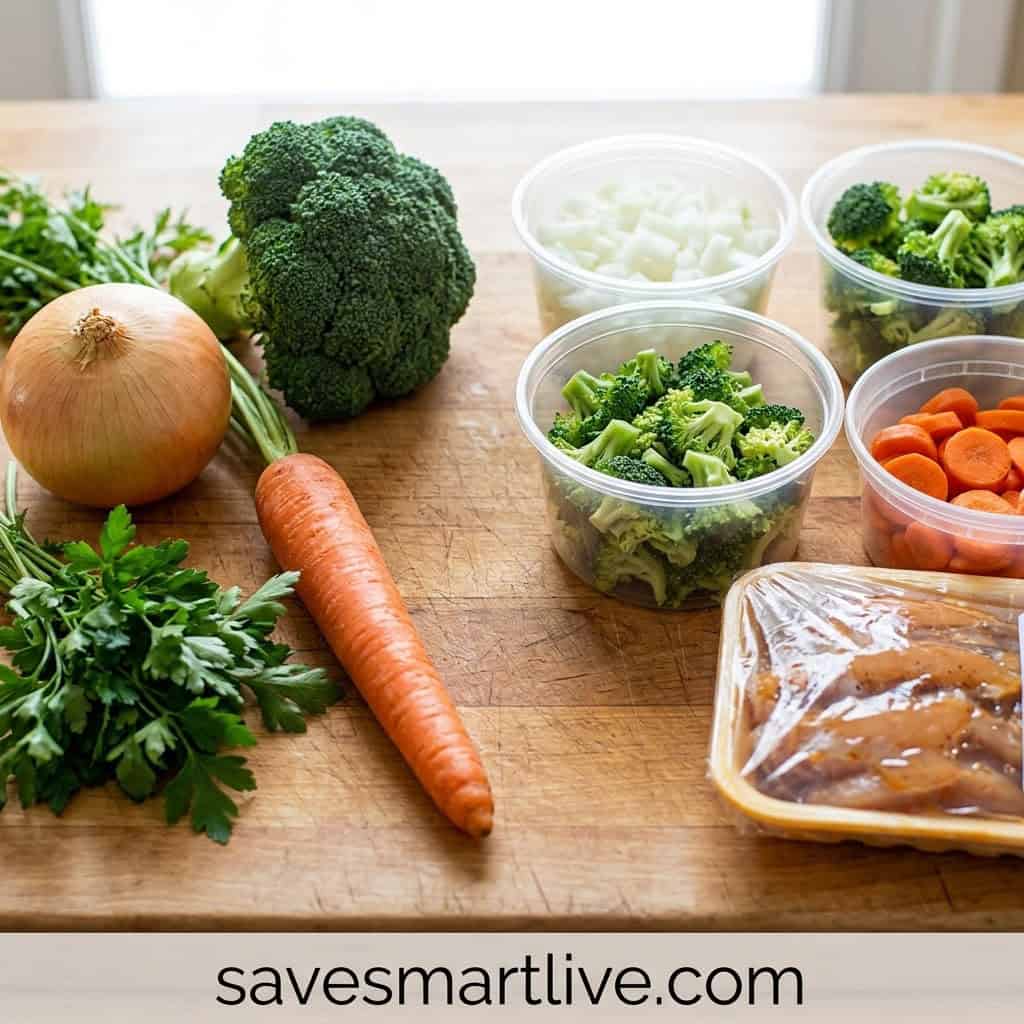
13. Buy Whole Ingredients, Not Pre-Cut or Pre-Marinated
Pre-cut fruit trays, marinated chicken packages, shredded cheese, bagged salad kits — all of these are convenient. They’re also significantly more expensive than buying the whole ingredient and doing the minimal prep yourself.
A whole head of lettuce costs a fraction of a bagged salad kit. A block of cheese is cheaper per ounce than shredded. Whole chicken thighs cost less than marinated ones.
You don’t have to give up all convenience. But identify the items where the price gap is large, and handle that prep yourself. It takes a few extra minutes and saves meaningful money every week.
14. Buy Meat in Bulk and Freeze It
Meat is usually the most expensive part of a grocery bill. One of the best ways to lower that cost is to buy in larger quantities when it’s on sale and freeze what you don’t use immediately.
Most cuts of meat freeze well for 2–4 months. Divide large packages into meal-sized portions before freezing so you can thaw exactly what you need.
Buying a family pack of chicken thighs or ground beef when it’s on sale — even if you don’t need it immediately — often saves 30–40% compared to buying smaller quantities at full price.

15. Shop at Warehouse Clubs for the Right Items
Costco and Sam’s Club aren’t right for every purchase, but for certain items they’re genuinely hard to beat.
Good buys at warehouse clubs:
- Olive oil, cooking oils
- Nuts, dried fruit, trail mix
- Paper products and cleaning supplies
- Meat (price per pound is usually lower)
- Cheese, butter, eggs
- Canned goods and pasta
Bad buys at warehouse clubs:
- Fresh produce you can’t use before it goes bad
- Items you don’t have storage space for
- Products you’ve never tried before (you’re stuck with a giant quantity if you hate it)
The annual membership ($50–$65) pays for itself if you shop there regularly for the right categories.

16. Try Curbside Pickup Instead of Shopping In-Store
This sounds counterintuitive — isn’t in-store shopping how you find deals?
Actually, curbside pickup has a hidden benefit: it forces you to make a deliberate list at home and stick to it. You can’t impulse-buy a snack display or get drawn in by an end cap when you’re ordering online.
Many stores (Walmart, Kroger, Target) offer free curbside pickup. Studies show that people who shop online and pick up in-store spend less than those who walk the aisles — because they’re not tempted by anything they didn’t plan to buy.

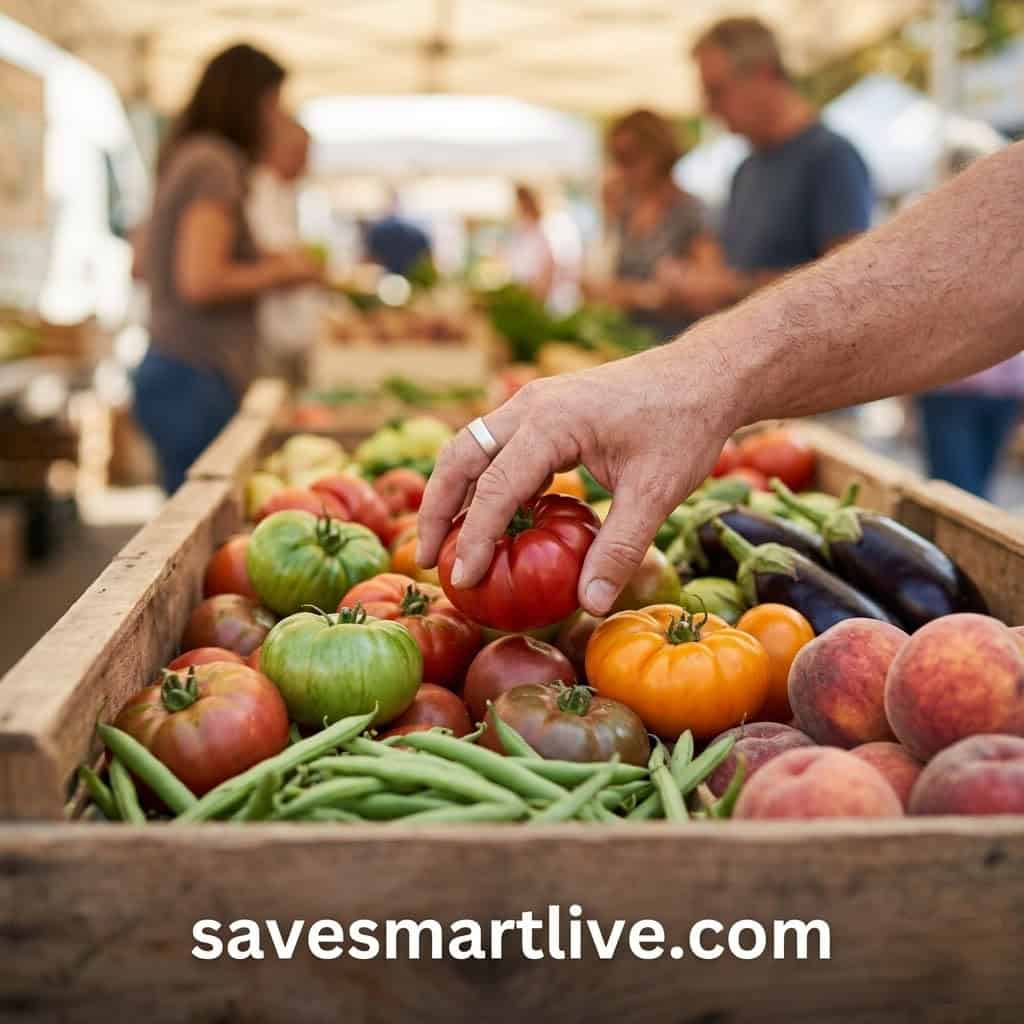
17. Buy Seasonal Produce
Produce that’s in season locally is almost always cheaper than out-of-season produce that’s been shipped from far away. It also tastes better.
Learn the rough seasonal calendar for your region:
- Spring: asparagus, peas, radishes, spinach, strawberries
- Summer: tomatoes, corn, zucchini, peaches, berries
- Fall: apples, squash, sweet potatoes, Brussels sprouts
- Winter: citrus, root vegetables, cabbage, kale
Building your meal plans around whatever is in season right now — rather than buying whatever you feel like — is a simple habit that lowers your produce costs consistently.
18. Organize Your Pantry and Fridge Properly
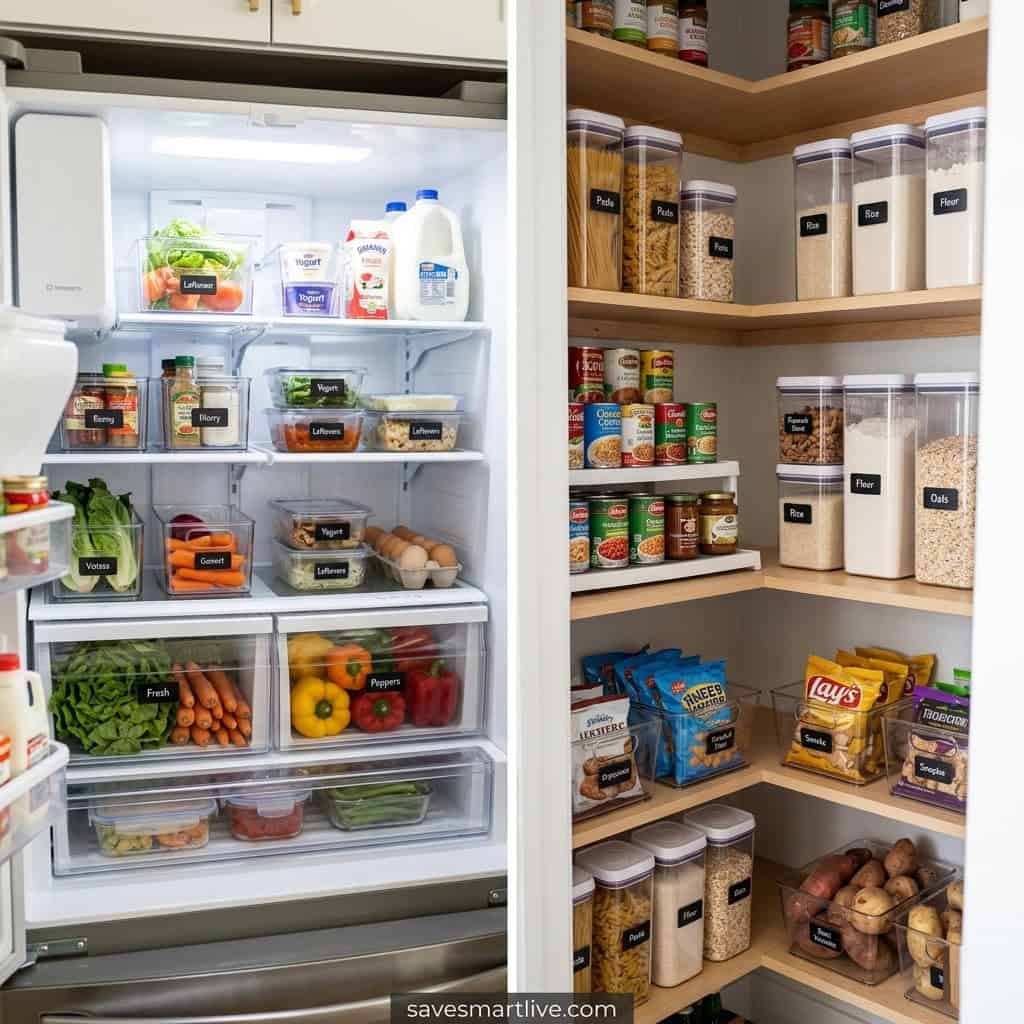
This one surprises people, but it’s real: an organized kitchen directly saves money.
When your pantry is cluttered and disorganized, you forget what you have. You buy duplicates of things you already own. You let things expire. You don’t notice what needs to be used up.
Spending an hour organizing your fridge and pantry — putting newer items in the back, older items in front, and clearly labeling leftovers — can immediately reduce waste and prevent unnecessary purchases.
One practical tip: do a pantry check every three months. Pull everything out, take stock of what you have, and build your next few weeks of meals around using up what’s already there before it expires.
19. Cook Once, Eat Multiple Times
Batch cooking is one of the most effective ways to stretch your grocery budget without extra effort.
When you cook dinner, make enough for at least two meals. Most soups, stews, grain bowls, casseroles, and stir-fries reheat beautifully. That means one cooking session and one grocery purchase covers multiple meals — and you’re less tempted to order takeout when the week gets busy.
Pick two or three recipes per week that naturally scale up, and cook large batches. Your grocery spend drops, your food waste drops, and you eat better on busy nights.

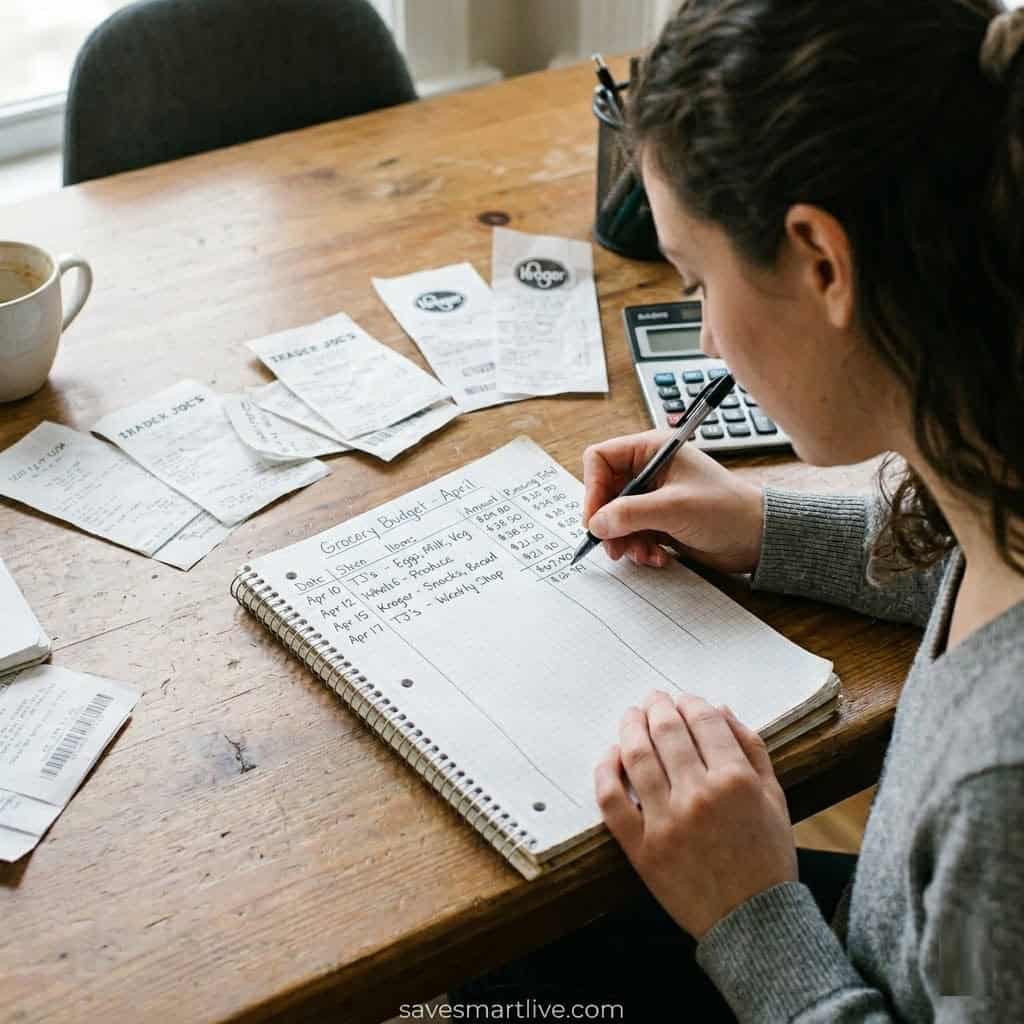
20. Track Your Grocery Spending for One Month
You can’t fix a problem you can’t see.
For just one month, track every dollar you spend on food — groceries, takeout, coffee, everything. Use a simple notes app, a spreadsheet, or a budgeting app like Mint or YNAB.
Most people are genuinely surprised by what they find. Hidden spending on convenience stores, food delivery apps, and coffee adds up to much more than expected. Once you see the real number, it’s much easier to make targeted cuts.
After your tracking month, you’ll know exactly where your food money goes — and where the easiest savings are hiding.
How Much Can These Hacks Actually Save?
Let’s put some rough numbers on it. For a family of four spending $900/month on groceries:
| Hack | Estimated Monthly Savings |
|---|---|
| Switch to Aldi / discount store | $80–$120 |
| Buy store brands consistently | $40–$60 |
| Meal plan and reduce food waste | $100–$200 |
| Stop pre-cut / convenience items | $30–$50 |
| Use loyalty programs + cashback apps | $20–$40 |
| Total potential savings | $270–$470/month |
That’s not a small number. Applied consistently, these habits can free up thousands of dollars per year without eating worse food.
Final Thoughts
Saving money on groceries doesn’t require couponing obsession, eating only rice and beans, or spending hours planning. It requires a few smart habits applied consistently.
Start with just two or three of these hacks this week. See the difference on your next receipt. Add a few more the following week. Over a month, the savings compound into something genuinely meaningful.
Your grocery bill doesn’t have to be as high as it is right now. It really doesn’t.
Read More : 50 Ways to Save Money Every Month (Real Tips That Actually Work)